France Curfews: Paris and Other Cities Tighten Rules After Riots
PARIS, France — French authorities have imposed overnight curfews in selected areas of Paris and other cities following widespread rioting, looting and attacks on public buildings, as the government faces…
Three things to know
- PARIS, France — French authorities have imposed overnight curfews in selected areas of Paris and other cities following widespread rioting, looting and attacks on public buildings, as the government faces…
- Read on for the verified facts and background.
- Follow this story for updates and the next chapter.
PARIS, France — French authorities have imposed overnight curfews in selected areas of Paris and other cities following widespread rioting, looting and attacks on public buildings, as the government faces mounting pressure over policing failures and the cost of rebuilding.
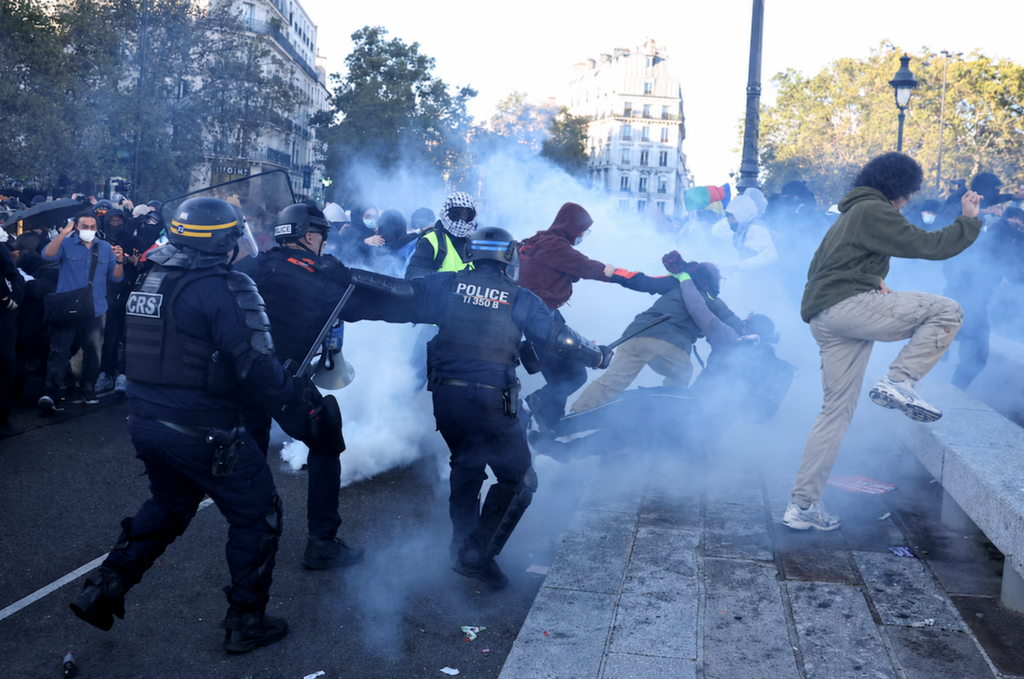
The restrictions follow the October 17 demonstrations, when a mass mobilisation over education, living costs and public services was accompanied by violence in several cities. Authorities are now combining local movement restrictions with criminal investigations, financial assistance for businesses and preparations for further protests.
In Paris, the first overnight order covered designated areas around Place de la République and the Les Halles shopping district from 11pm on Monday, October 19, until 6am on Tuesday. It prohibited adults and minors from entering or remaining within the specified boundaries.
Separate restrictions on gatherings and demonstrations began at 8pm in additional parts of the capital. These measures covered broader areas than the two overnight curfew zones, making the distinction between a gathering ban and a restriction on individual presence important.
Paris police subsequently renewed the targeted restrictions, saying the first night had helped restore calm. The measures have become central to the government’s attempt to protect commercial districts and prevent further disorder while officers investigate the weekend’s events.
Across France, the response is being organised through local orders with different boundaries, hours and age restrictions. Some measures apply to everyone within a designated area; others focus on children and teenagers.
The arrangements announced on October 19 and 20 included:
| Location | Announced restrictions |
|---|---|
| Paris: Place de la République and Les Halles | Presence prohibited within designated zones from 11pm to 6am, covering adults and minors. |
| Lyon city centre | Overnight curfew from 9pm to 6am, alongside separate restrictions on gatherings. |
| Lille and several other northern towns | Curfews targeting under-18s, generally from 8pm to 6am under the initial orders. |
| Nice | Curfew for minors from 9pm to 6am in specified central areas, announced through October 25. |
| Bordeaux | Curfew for unaccompanied minors in selected central streets from 10pm to 7am, beginning October 20 and scheduled through the morning of October 26. |
The variations reflect local decisions about where disorder occurred and which restrictions authorities considered necessary. The announced hours should therefore be read alongside the boundaries and duration of each individual order.
Marseille also announced curfews for minors around commercial areas particularly affected by the violence, beginning on Tuesday night.
Prime Minister Sébastien Lecornu set out the broader approach after a crisis meeting on Monday. He instructed prefects to work with mayors on partial, closely targeted curfews, saying restrictions should respond to conditions in the affected places.
Lecornu also left open the possibility of declaring a state of emergency if required. At that stage, however, he presented local curfews as the government’s preferred response and said a blanket restriction across Paris would be inappropriate.
The immediate security response follows an unusually public acknowledgement of failure by Interior Minister Laurent Nuñez.
Nuñez admitted that police had “lost control” in some major cities during Saturday’s unrest. He offered his resignation on Sunday, but President Emmanuel Macron kept him in office, citing the operational need for continuity in the leadership of law enforcement.
The decision preserved the minister’s command during the crisis while leaving unresolved the questions surrounding preparation, intelligence and deployment.
Macron’s office said Nuñez should ensure transparency over the failures in planning and intelligence that preceded the violence. The president also sought changes to policing tactics to prevent a repeat of the disorder.
For the government, those demands create two parallel responsibilities: restoring order immediately and explaining why authorities were unable to prevent extensive damage during demonstrations that had been announced in advance.
The scale of the criminal investigation is already substantial. Justice Minister Gérald Darmanin told a parliamentary hearing that 2,513 detentions in police custody had been recorded since Saturday.
His account, given on October 19, also described continuing custody proceedings and people held pending further judicial action. The figures represent stages in an ongoing criminal process, rather than a final tally of convictions.
Reports put the number of injured police officers at approximately 1,000. AFP also reported that a demonstrator lost a hand in an explosion involving a police crowd-control grenade, adding to scrutiny of the weapons and tactics used during the confrontations.
Investigators are examining both offences committed during the disturbances and evidence of possible organisation behind particular attacks. Around 200 investigators in the Paris region have been assigned to review security-camera footage and videos circulated on social media, according to reporting on the operation.
That work could help establish who participated in specific incidents, how groups moved between locations and whether some attacks were coordinated.
The investigation extends across different forms of offending. Theft from a shop, destruction of a vehicle and an organised attack on a public building involve distinct actions, even when they occur during the same period of unrest.
Establishing individual responsibility will require identifying the people involved and reconstructing events at each location. Political descriptions of the disorder cannot substitute for that evidence.
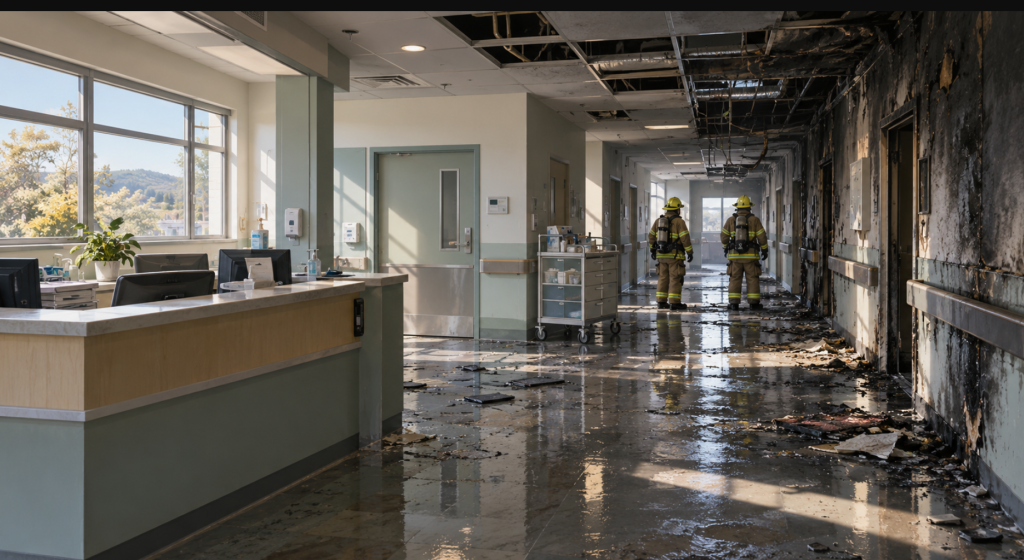
One of the most striking incidents occurred in Limoges, where fire devastated the city’s nineteenth-century town hall. Images showed flames engulfing the building as parts of its roof and tower collapsed.
Authorities have since arrested a man suspected of involvement in the blaze. The arrest forms part of the continuing investigation into the attack on the historic building.
Alongside the criminal investigation, the government faces pressure to help businesses reopen.
Alain Di Crescenzo, president of France’s chambers of commerce and industry network, estimated that more than 2,000 businesses had been affected. Speaking to RTL, he put the damage in the hundreds of millions of euros.
Those figures remain assessments of a developing situation, with businesses continuing to establish the extent of lost stock, property damage and interruption to trading.
In Marseille, local chamber president Jean-Luc Chauvin told the BBC that shop owners were in “deep distress” and feared for the survival of their businesses. His comments underline the consequences for smaller operators, whose ability to withstand a closure may depend on available cash, insurance payments and the speed of repairs.
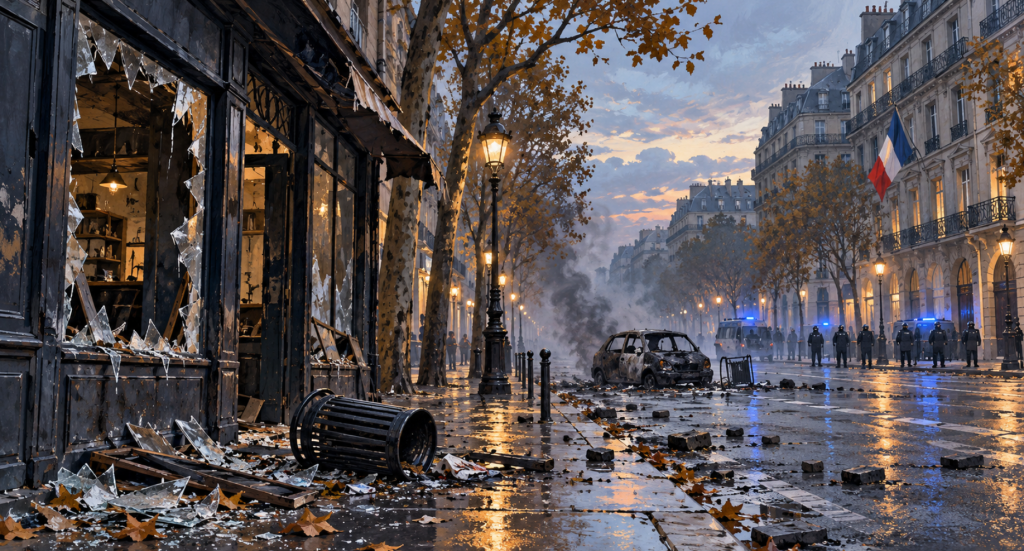
Replacing a broken window is only one part of that recovery. A damaged shop may also need to secure its premises, replace equipment, rebuild stock and meet bills while customers are unable to enter. Employees can lose working hours, while nearby businesses may experience reduced foot traffic.
On October 20, the French government published an economic support package covering employment, payment relief, financing and insurance arrangements.
It included exceptional state funding for short-time work where businesses had to reduce or suspend activity. The published terms specified employee compensation equivalent to 60% of gross pay, with full compensation for workers on the statutory minimum wage, alongside arrangements intended to remove the employer’s remaining cost.
The package also provided for payment relief on social contributions and taxes, accelerated tax-related reimbursements, and dedicated zero-interest loans of up to €50,000 over three years through Bpifrance.
A separate support fund was announced for small businesses suffering substantial damage and loss of activity. Insurers were asked to accelerate assistance, with measures including a longer claims-notification period and advances in appropriate cases.
These measures address the immediate risk that damage turns into prolonged closure or job losses. Their practical effect will depend on how quickly assistance reaches affected businesses and how soon premises can safely return to use.
Lecornu has also said the government wants those responsible for destruction to bear its cost. He announced plans for legislation intended to help recover money from offenders.
That announcement describes a proposed additional response. It does not establish that the full cost of the recovery has already been recovered or that every affected business will receive immediate compensation from an identified offender.
Online resale platforms have become another focus of the response.
French officials said goods taken during the looting had appeared for sale online. Government representatives subsequently met platform operators and sought the removal of suspected stolen items, stronger monitoring and cooperation with investigators.
Centre Presse Aveyron reported that platforms had committed to intensified moderation and cooperation aimed at identifying suspicious sellers and listings potentially connected to the thefts.
Vinted said stolen goods were prohibited on its service and that its teams had acted to remove listings associated with the looting while increasing monitoring.
The company’s response adds another line of inquiry to the review of street footage. Investigators may be able to connect stolen stock and online listings with particular offences, although suspicious advertisements still require examination rather than assumptions about every seller offering a discounted item.
The security and economic consequences have increasingly dominated the national discussion, but the demonstrations began with a different set of concerns.
Students started protesting in September over school conditions, including inadequate resources and deteriorating facilities. The mobilisation later broadened to encompass living costs, fuel prices and pressure on public services, drawing support from trade unions and other protest groups.
Authorities estimated that about 550,000 people took part in the October 17 demonstrations. Organisers put the figure closer to 800,000. Hundreds of thousands marched peacefully even as violent groups attacked property and confronted police in several locations.
That distinction remains central to the dispute over the government’s response. Peaceful participants want their demands addressed, while residents and businesses affected by the disorder want credible protection and accountability.
Curfews can restrict activity in particular areas overnight. They do not, by themselves, resolve the arguments about education, affordability and public investment that brought demonstrators onto the streets.
Those competing pressures are now feeding directly into the approaching 2027 presidential election.
Lecornu has accused radical-left groups of seeking to sustain disorder before the vote. Politicians associated with La France Insoumise have rejected attempts to hold their movement responsible for the violence.
LFI leader Jean-Luc Mélenchon challenged the prime minister to substantiate his accusation and accused the government of inflaming the situation. Their exchange reflects a wider struggle over whether the unrest should primarily be understood through public-order failures, political mobilisation or the grievances behind the protests.
Claims that a political movement directed particular criminal acts require evidence linking it to those acts. Attendance at a demonstration, support for student demands and responsibility for violence remain separate questions.
The unrest has also prompted warnings to foreign visitors. In an October 19 security alert, the United States Embassy in Paris advised Americans to avoid demonstration areas and exercise caution if they unexpectedly encountered large gatherings.
The alert noted reports of partial curfews and the possibility of further restrictions or scattered protests. Its advice concerned affected areas and gatherings, rather than presenting every part of France as subject to the same conditions.
The government is now preparing for another test of its security arrangements, with further demonstrations planned for Saturday, October 24. Authorities have promised a larger operation following the failures acknowledged over the previous weekend.
Military personnel are also being assigned to protect sensitive sites, allowing more police officers and gendarmes to concentrate on protest-related duties.
The next mobilisation will test whether revised deployments and local restrictions can protect peaceful demonstrators, residents and businesses. At the same time, the investigations and recovery programme will determine how quickly damaged communities can reopen—and whether the government can restore confidence beyond the hours covered by a curfew.
That is the story in a minute. For the evidence, context and what happens next, switch to the full story.

Comments
0 commentsCommunity rules
To read and join the conversation, please agree to our rules.
You have agreed to the community rules.
No comments yet. Start the conversation.