France Protests: Riots Deepen Political Crisis Before 2027 Election
PARIS, France — The shattered shopfronts, burning buildings and confrontations with police that marked France’s October 17 protests have triggered a national argument over public order, political responsibility and the…
Three things to know
- PARIS, France — The shattered shopfronts, burning buildings and confrontations with police that marked France’s October 17 protests have triggered a national argument over public order, political responsibility and the…
- Read on for the verified facts and background.
- Follow this story for updates and the next chapter.
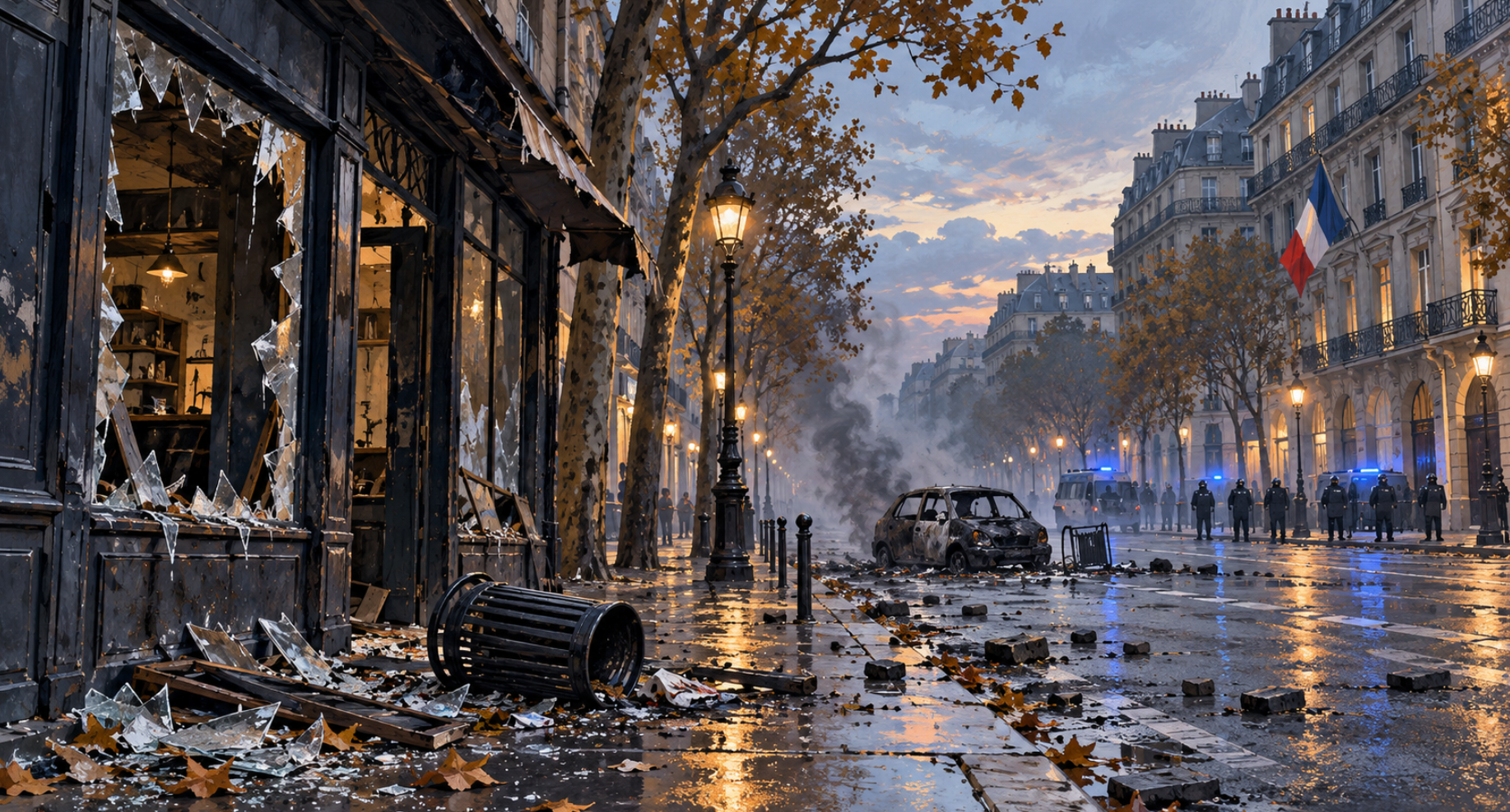
PARIS, France — The shattered shopfronts, burning buildings and confrontations with police that marked France’s October 17 protests have triggered a national argument over public order, political responsibility and the frustrations driving people onto the streets.
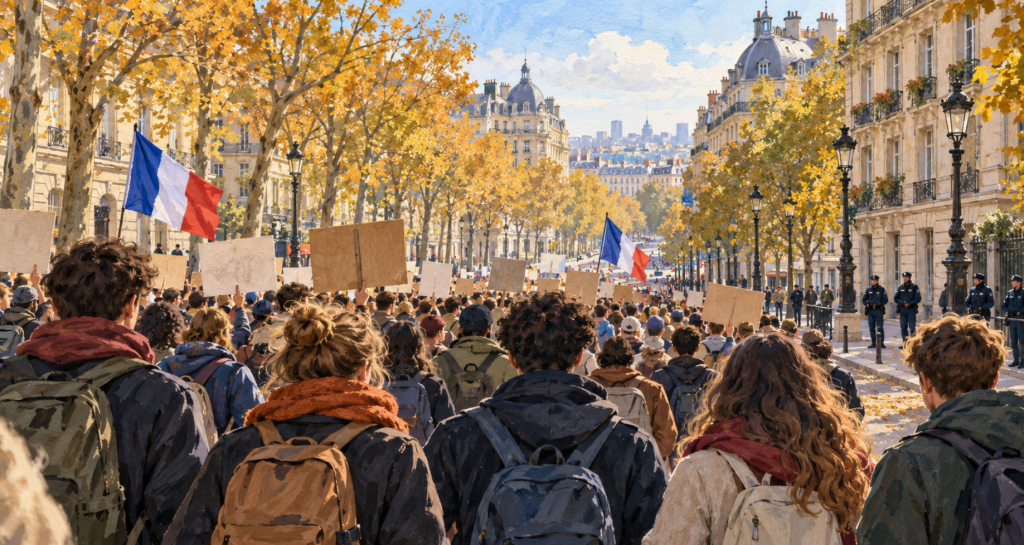
Behind that argument lies a distinction many demonstrators want preserved: hundreds of thousands marched over education, living costs and deteriorating public services, while groups involved in violence and looting turned parts of the mobilisation into scenes of destruction.
Elisabeth, a woman interviewed beside damaged shops in Paris, expressed anger at the way those scenes had come to define the demonstrations.
“This is not the face of France,” she told a reporter, rejecting the suggestion that the violence represented the wider public.
Her reaction captures the competing pressures now confronting the country. Residents and businesses want protection. Peaceful demonstrators want their demands heard. Police face scrutiny over their preparedness and tactics. Political leaders, meanwhile, are fighting to shape the meaning of the unrest ahead of the 2027 presidential election.
Authorities estimated that approximately 550,000 people participated in 110 marches across France on October 17. Organisers, including the CGT trade union and student organisations, put attendance at about 800,000. Those differing estimates nevertheless establish the scale of a mobilisation that extended far beyond the groups involved in confrontations.
In Paris, rioters damaged shops, attacked police vehicles and set objects alight as officers used tear gas and water cannons. Elsewhere, the destruction reached prominent public buildings: Limoges’ historic city hall burned, protesters broke into Marseille’s city hall, and Lyon’s tourism office was set on fire.
The attacks gave the unrest a national visibility that rapidly eclipsed much of the peaceful marching. They also placed the government under pressure to explain how announced demonstrations had produced such extensive disorder.
The financial consequences are still being assessed. Commerce Minister Serge Papin said at least 3,000 businesses had suffered damage or looting since Saturday, according to Le Monde. That figure describes affected businesses across the period; it should not be read as confirmation that 3,000 shops were all looted during a single demonstration.
Prime Minister Sébastien Lecornu subsequently promised a dedicated support fund for affected businesses.
For shopkeepers, the consequences can extend beyond replacing windows or stock. Temporary closures interrupt income, repairs consume time and uncertainty can deter customers. Employees and small suppliers may also feel the effects. The destruction therefore threatens livelihoods in communities already arguing over affordability and economic insecurity.
The movement’s origins, however, lie in concerns that preceded the weekend’s violence. School protests began in September, particularly in working-class communities around Paris, before developing into a broader challenge over inequality, education and living standards.
Students have described overcrowded classrooms, inadequate resources and a sense that the quality of their education is being allowed to decline. Pew Research Center’s recent analysis of France’s economic mood also identified underfunded and overcrowded schools among the grievances cited by protesters.
For young demonstrators, the question is not simply how much the state spends. It is whether public institutions can offer a credible route towards a secure future.
That helps explain why students reject suggestions that their movement exists only because political parties have encouraged it. Lisa Cordat, identified as an FSE student union representative in interviews following the unrest, said young people organised through their own networks and messaging platforms.
“Student anger comes from the ground up,” she said.
Political organisations have supported and attended demonstrations, but their presence does not settle who initiated particular protests, who directed individual participants or who was responsible for criminal acts. Those are different questions, requiring different evidence.
The government has nevertheless made strong accusations against the radical left. Lecornu has accused La France Insoumise, or LFI, of inflaming tensions, while Interior Minister Laurent Nuñez has blamed violent radical groups and opportunistic offenders for the disorder.
The dispute escalated as Lecornu challenged Jean-Luc Mélenchon to distance himself unequivocally from those committing violence. Mélenchon, who joined the Paris demonstration, responded by calling for calm and telling supporters they had no place in looting or destruction.
Mélenchon has also challenged the government’s preparation and policing strategy. In an interview after the demonstrations, he condemned the burning of Limoges’ city hall and denied that his movement controlled the students’ mobilisation.
He accused the executive of allowing the situation to deteriorate and argued that political rivals were more concerned with the presidential contest than with everyday conditions. Those accusations remain part of the political dispute, rather than established explanations for the authorities’ decisions.
Images of masked groups attacking police vehicles have reinforced concerns that some participants arrived prepared for confrontation. But preparation by particular groups would not, by itself, demonstrate a single organisation directing every incident across the country.
The weekend involved different locations, targets and forms of disorder. Attacks on public institutions, confrontations with officers and theft from shops may overlap without necessarily sharing the same organisers or motives.
Reports of stolen goods appearing online have added to the impression that some looting was opportunistic. Establishing the relationships between organised violence, spontaneous participation and theft will require investigators to reconstruct events rather than treat everyone present as part of a uniform movement.
Police preparedness is another central question. Le Monde reported that authorities struggled to anticipate how online mobilisation would translate into crowds on the streets. Officers faced dispersed confrontations and pressure at multiple locations, complicating decisions about deployment and reinforcement.
The scrutiny also concerns the treatment of demonstrators. Authorities opened an investigation after a young protester lost a hand in Saint-Étienne. Nuñez initially declined to confirm reports that the injury resulted from a police grenade.
That incident sits within a wider argument over how police can protect peaceful marches while responding to people intent on violence. Insufficient intervention can leave residents, businesses and public buildings exposed; indiscriminate intervention can endanger demonstrators and deepen distrust.
National Assembly President Yaël Braun-Pivet has sought a parliamentary examination of both sides of that problem. Her proposed inquiry covered the methods and organisation of violent groups, alongside the authorities’ anticipation, staffing and public-order strategy.
Its stated purpose included identifying failures and protecting people’s ability to demonstrate safely. Accountability for violence and scrutiny of the state’s response are therefore both within the proposed remit.
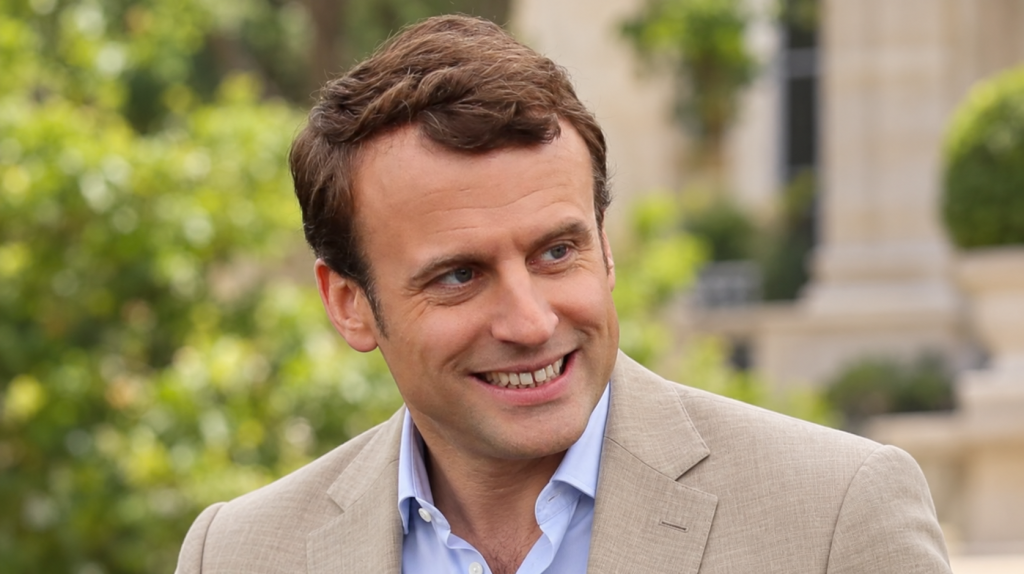
President Emmanuel Macron addressed the nation on October 18, condemned the violence and expressed support for security personnel and those injured. The intervention underscored the seriousness of the situation, but the executive still faces the practical task of restoring calm while responding to the grievances behind the mobilisation.
The government’s immediate response has included geographically limited curfews. Lecornu announced the measures after a crisis meeting on October 19, saying they could be closely targeted to particular areas. He explicitly distinguished that approach from placing all of Paris under curfew.
He also left open the possibility of an emergency declaration if circumstances required it, while presenting local restrictions as the preferred response at that stage.
By Tuesday, restrictions were operating in designated parts of Paris and other cities. The Associated Press reported that the National Assembly was launching an inquiry into the violence and policing strategy.
These measures introduce another political challenge: demonstrating that restrictions can prevent further destruction while remaining sufficiently focused to preserve ordinary life and legitimate protest.
The approaching presidential election makes every decision more contested. With the vote expected in spring 2027, the unrest has given candidates a powerful opportunity to advance competing accounts of France’s problems.
For Mélenchon and LFI, the demonstrations provide a platform for arguments about inequality, public investment and a government they say has become detached from ordinary people. The accompanying violence creates a simultaneous challenge: sustaining support for protesters while making clear that the party does not endorse destruction.
Marine Le Pen and the National Rally have emphasised authority, security and the executive’s inability to maintain control.
In a video address published on October 18, Le Pen described a profound crisis of confidence and authority. She portrayed France as caught between violence and governmental powerlessness, presenting her movement as an alternative to an exhausted political establishment.
Such scenes give National Rally an opportunity to reinforce its law-and-order message. Whether that opportunity produces additional votes will depend on how the crisis develops, how voters assess the competing responses and whether candidates can offer convincing answers beyond condemnation.
The centrist camp faces pressure on two fronts. It must demonstrate that the state can protect people and property, while persuading dissatisfied citizens that it understands their concerns about schools, household budgets and public services.
That is difficult when fiscal pressures constrain the government’s room for manoeuvre. Promising better services requires credible funding decisions; emphasising spending restraint risks intensifying the complaints that brought people onto the streets.
Social media has become another battleground. Former prime minister Gabriel Attal has proposed temporarily restricting access to selected platforms in a targeted way, arguing that online networks can facilitate organisation and encourage imitation.
Green presidential candidate Marine Tondelier criticised that proposal as a threat to civil liberties. Their exchange illustrates how quickly the debate has expanded from policing streets to regulating the channels through which people communicate.
Platforms can serve several functions during unrest. Demonstrators use them to arrange meetings, explain grievances and share evidence of their experiences. Videos can also circulate without context, amplify inflammatory claims or expose users to images of violence far from where they live.
Identifying those risks does not establish that every act filmed online was caused by a platform. Nor does it answer whether a particular restriction would prevent disorder, displace communication elsewhere or obstruct lawful activity. Those questions require more specific evidence than the existence of widely shared footage.
Pew’s recent research suggests the debate is taking place amid growing public concern about digital platforms. Its 37-country survey found increasingly negative assessments of social media’s effect on democracy in many countries, with France among the wealthy nations where at least half of adults considered its impact harmful.
The French unrest has also unfolded alongside demonstrations elsewhere in Europe. Reuters reported protests in Belgium, Portugal and Italy over living costs and related concerns, while students in Albania rallied over perceived corruption, employment and education.
The differences matter. Belgian students raised concerns about education costs and access, Portuguese demonstrators focused heavily on housing affordability, and Albania’s protests involved demands directed at the national government. The events share aspects of economic insecurity without necessarily forming a single coordinated movement.
Across these settings, a recurring concern is whether established political institutions can respond effectively to pressures people experience in their daily lives.
For younger generations, education, housing and employment are closely connected. Poor learning conditions can make future opportunities feel less secure. Expensive housing can delay independence. Uncertainty over technology, climate change and international instability can compound an existing sense that important decisions are being made beyond their control.
That sense of limited influence helps explain why the argument in France extends beyond individual policies to confidence in the political system itself.
Pew’s spring 2026 survey found that 69% of French adults were dissatisfied with the way democracy was working in their country. The corresponding figures were 68% in Spain, 62% in Italy and 69% in the United States.
These findings concern satisfaction with democratic performance. They do not measure support for rioting, and they were collected before the October unrest. Their relevance is the wider climate of dissatisfaction in which the demonstrations developed.
Economic pessimism is similarly pronounced. A separate Pew analysis found that 85% of French adults rated the national economy negatively in its spring survey, the highest proportion among the 18 high-income countries included.
The research, based on interviews conducted between February and April, found widespread negative views across demographic groups. This suggests that concern about France’s economic direction extends well beyond students or any single political constituency, without explaining the motives of individual people involved in the disturbances.
Some residents fear those underlying concerns are being lost as politicians compete over responsibility for the violence.
Lina, a 25-year-old interviewed after the unrest, said political leaders were looking for scapegoats instead of examining why people felt frightened and abandoned. A teacher identified as Mar similarly argued that the destruction had distracted attention from legitimate demands for stronger public services.
Their frustration returns the debate to the distinction Elisabeth sought to defend beside the damaged Paris shops. Condemning attacks on people and property does not answer students’ complaints about education. Supporting those complaints does not excuse the attacks.
The immediate priorities are concrete: prevent further violence, investigate offences, establish what went wrong in policing and help damaged businesses recover. Alongside them sits the slower work of addressing classroom conditions, affordability and public confidence.
As France approaches the 2027 election, its political leaders will face scrutiny over both tasks. The response will be measured in safer streets and functioning public services, as well as in the promises made during the campaign.
That is the story in a minute. For the evidence, context and what happens next, switch to the full story.

Comments
0 commentsCommunity rules
To read and join the conversation, please agree to our rules.
You have agreed to the community rules.
No comments yet. Start the conversation.