Cristiano Ronaldo Retires From Portugal After 23 Years, 146 Goals and a Record-Breaking International Career
LISBON, Portugal — Cristiano Ronaldo has announced his retirement from international football, bringing an end to an extraordinary 23-year career with Portugal that delivered 146 goals, 234 appearances, a European…
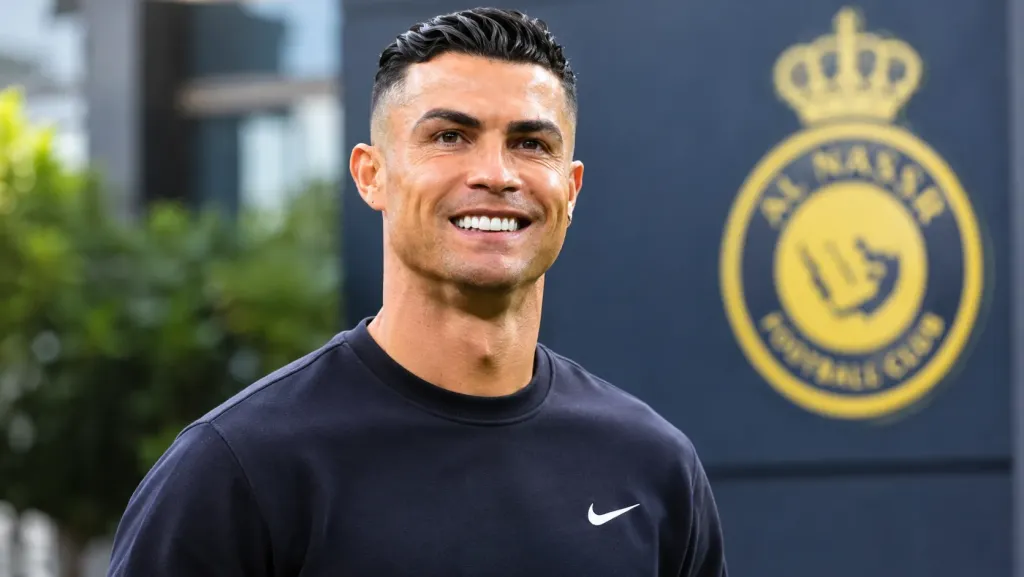
LISBON, Portugal — Cristiano Ronaldo has announced his retirement from international football, bringing an end to an extraordinary 23-year career with Portugal that delivered 146 goals, 234 appearances, a European Championship triumph and two UEFA Nations League titles.
The 41-year-old football superstar confirmed his decision in an emotional video published on social media on Thursday, closing one of the most remarkable chapters in modern football history.
Ronaldo leaves the Portuguese national team holding the men’s world records for international goals and appearances, achievements accumulated across six FIFA World Cups and six European Championships.
His retirement follows Portugal’s elimination from the 2026 FIFA World Cup and a public disagreement with national team coach Jorge Jesus, which resulted in the forward leaving the national squad and subsequently receiving disciplinary sanctions.
The announcement ends his involvement with Portugal but does not mark his retirement from professional football.
Ronaldo will continue playing club football for Saudi Arabian side Al-Nassr, where he remains one of the sport’s most prominent international figures.
In his farewell message, Ronaldo reflected on the responsibility of wearing Portugal’s famous number seven shirt.
He described the decision as an emotional one, expressing gratitude to the Portuguese people, his family, former teammates, coaches and national team staff.
His departure leaves Portugal facing a major transition as the national team prepares for a future without the player who served as its most recognisable figure for more than two decades.
It also raises wider questions about the end of football’s Ronaldo era, the significance of his records and the legacy he leaves for the next generation of Portuguese players. FIFA World Cup+2
Cristiano Ronaldo’s Emotional Farewell to Portugal
Ronaldo delivered his retirement announcement through a video addressed directly to the Portuguese public.
Rather than concentrating solely on goals, trophies and personal achievements, the five-time Ballon d’Or winner reflected on the emotional significance of representing his country.
He spoke about the responsibility associated with the national team shirt and the memories accumulated during his international career.
It was a role that began in August 2003, when Ronaldo was just 18 years old and emerging as one of Europe’s most promising young players.
More than 23 years later, he leaves as Portugal’s record appearance-maker and goalscorer.
The farewell was also deeply personal.
Ronaldo thanked the many people who supported his international journey and acknowledged the emotional difficulty of ending a commitment that occupied more than half his life.
His message carried a sense of finality.
Unlike earlier speculation about retirement, the announcement explicitly confirmed that his international career was ending.
For Portuguese supporters, it marked the conclusion of an era in which Ronaldo’s presence became almost inseparable from the identity of the national team.
For younger fans, Portugal without Ronaldo is an unfamiliar prospect.
For older supporters, his departure closes a journey that began alongside established stars such as Luís Figo and developed into a period of unprecedented international success.
The announcement was quickly followed by tributes from football organisations, former clubs and players who had shared the national team dressing room with him.
The Portuguese Football Federation expressed its gratitude for Ronaldo’s contribution, while Al-Nassr emphasised that his playing career would continue at club level. The National+1
From Madeira to Manchester: How Ronaldo’s Portugal Journey Began
Cristiano Ronaldo dos Santos Aveiro was born on 5 February 1985 in Funchal, Madeira.
His football development began far from the wealth and international recognition that would later define his professional career.
As a child, he moved from Madeira to mainland Portugal to pursue opportunities at Sporting CP’s academy.
The transition placed him in a demanding environment where his technical ability, athleticism and competitive drive attracted increasing attention.
By the summer of 2003, Ronaldo had emerged as one of the country’s most promising young players.
His performances for Sporting helped secure a transfer to Manchester United, introducing him to a much larger international audience.
On 20 August 2003, shortly after joining the English club, he made his senior international debut for Portugal against Kazakhstan.
Then-national team coach Luiz Felipe Scolari introduced Ronaldo as a substitute for Luís Figo.
The significance of that substitution would become clearer over the following years.
Figo was among Portugal’s established football icons, while Ronaldo represented the beginning of a new generation.
At the time, few could have anticipated that the teenager would remain part of the national team for more than two decades.
Ronaldo’s first major international tournament came at UEFA Euro 2004, hosted by Portugal.
The young forward played an important role as the hosts reached the final.
However, Portugal lost the championship match to Greece, leaving Ronaldo and his teammates disappointed on home soil.
It was the first of several major tournaments in which Ronaldo would experience both the excitement of international success and the frustration of falling short.
That early defeat helped establish a defining theme of his Portugal career: the pursuit of a major trophy for a country with considerable football talent but limited senior international silverware.
Euro 2016: The Night Ronaldo Finally Lifted a Major Trophy for Portugal
The defining achievement of Ronaldo’s international career came in July 2016, when Portugal defeated host nation France to win the UEFA European Championship.
By then, Ronaldo had spent more than a decade trying to lead his country to a major international title.
Portugal entered the final at the Stade de France knowing that victory would deliver the first major senior men’s international trophy in its history.
For Ronaldo, however, the evening took a painful turn.
After suffering an injury during the opening stages of the match, the Portuguese captain was forced to leave the field in the 25th minute.
He watched the remainder of the final from the sidelines as his teammates attempted to overcome a heavily favoured French side.
The match remained scoreless through normal time.
Then, in the 109th minute, substitute Éder produced the decisive moment, striking from outside the penalty area to give Portugal a 1–0 victory.
Although Ronaldo could not finish the match on the pitch, he lifted the trophy as captain.
The image became one of the defining moments of his international career.
Portugal had finally secured the major championship that had eluded previous generations.
Ronaldo’s contribution to that achievement extended across the tournament, including important performances that helped his country reach the final.
For Portuguese football, the victory established a new standard of international success.
For Ronaldo, it ensured that his extraordinary individual accomplishments would be accompanied by the most important team honour of his national career. UEFA.com+1
Portugal’s Nations League Success in 2019 and 2025
Ronaldo’s international achievements did not end with Euro 2016.
Three years later, Portugal won the inaugural UEFA Nations League, defeating the Netherlands 1–0 in the 2019 final.
Ronaldo had played an important role in reaching that match, scoring a hat-trick against Switzerland in the semi-final.
The competition provided another opportunity for Portugal to demonstrate its strength against European opposition.
In 2025, Portugal secured a second Nations League title, defeating Spain in a penalty shootout after a 2–2 draw.
Ronaldo scored during the match, contributing to a victory that gave the national team another major trophy.
The success was particularly notable because he was already 40 years old.
By that stage, most players from his generation had retired from international football or dramatically reduced their involvement.
Ronaldo continued competing at the highest international level.
His presence also provided a connection between Portugal’s earlier generation of players and its emerging young talent.
Across those three tournament victories — Euro 2016 and the Nations League titles of 2019 and 2025 — Ronaldo helped establish Portugal as a consistent contender in major international competitions.
The Records Cristiano Ronaldo Leaves Behind
Ronaldo’s retirement brings an end to an international career defined by longevity as well as goalscoring.
Portugal appearances
234
Men’s international world record
International goals
146
Men’s international world record
FIFA World Cups
6
2006 through 2026
International trophies
3
Euro 2016; Nations League 2019 and 2025
Career figures confirmed by FIFA following Ronaldo’s retirement announcement on 5 November 2026.
Ronaldo also became the first male player to score in six different FIFA World Cup tournaments.
His three goals at the 2026 World Cup brought his career tally at the competition to 11.
Those records reflect not only his attacking ability but also an exceptional capacity to maintain his place in the national team as teammates, coaches and tactical approaches changed.
His international career spanned several generations of footballers.
The Ronaldo who made his debut in 2003 was a young winger renowned for his speed and dribbling.
By the final stages of his career, he had developed into a more central goalscoring forward, relying heavily on positioning, anticipation and finishing.
That evolution helped extend his career at the highest level.
It also explains why his international record is unlikely to be matched quickly: a future player would need to combine elite production with an unusually long period of selection for their country. FIFA World Cup+1
Ronaldo’s Final World Cup Ended in Defeat to Spain
The 2026 FIFA World Cup in North America was Ronaldo’s sixth and final appearance at the tournament.
Portugal entered the competition with an experienced squad and a younger generation of players capable of supporting its veteran captain.
Ronaldo contributed three goals during the tournament.
However, Portugal’s campaign ended in the round of 16 after a 1–0 defeat to Spain on 6 July.
Mikel Merino scored the decisive goal in second-half stoppage time, ending Portugal’s hopes of advancing to the quarter-finals.
The defeat was particularly significant because Ronaldo had already indicated that the tournament would be his final World Cup.
After the match, he acknowledged his disappointment but said he did not want to make an immediate decision about his international future while emotions remained high.
He subsequently continued his involvement with Portugal, leaving open the possibility of further appearances.
For several months, it appeared that his international career might extend into the next Nations League campaign.
That possibility ended with Thursday’s retirement announcement.
Although he never won the World Cup, Ronaldo’s international achievements include numerous qualifying campaigns, tournament appearances, individual records and three major titles with Portugal.
His World Cup career began as a young player in Germany in 2006 and ended two decades later against Spain in 2026.
Few footballers have remained part of the same national team’s major tournament plans for such a prolonged period. FIFA+1
The Disagreement With Portugal Coach Jorge Jesus
Ronaldo’s retirement comes after a public disagreement with national team coach Jorge Jesus over his role in the squad.
The dispute emerged during Portugal’s September 2026 international fixtures.
Ronaldo started the Nations League match against Wales but remained on the substitutes’ bench throughout Portugal’s 2–1 victory over Norway on 27 September.
He subsequently left the national team camp in Copenhagen on 30 September, ahead of Portugal’s next match against Denmark.
The departure occurred without the required authorisation.
Ronaldo later accused Jesus of failing to honour assurances concerning his involvement in the team.
The coach disputed Ronaldo’s account.
In a subsequent statement, Ronaldo apologised to teammates and supporters for the manner of his departure and indicated that he would accept disciplinary consequences.
On 19 October, the Portuguese Football Federation imposed a 30-day suspension and a €255 fine.
The federation took account of Ronaldo’s admission of wrongdoing and disciplinary record when determining the punishment.
The sanction was retrospective, meaning it was expected to expire before Portugal’s November fixtures.
Ronaldo had previously indicated that he remained available for selection.
His retirement now ends that possibility.
The disagreement forms part of the circumstances surrounding his departure, although it would be inaccurate to conclude that it was the sole reason for his decision.
Ronaldo had already considered ending his international career following the 2026 World Cup.
His age, prolonged involvement with the national team and the transition towards a younger squad were also relevant parts of the wider context. ABC News+2
Portuguese Football Federation Plans a Farewell Tribute
Portugal’s football authorities responded to the announcement with a statement acknowledging Ronaldo’s contribution.
The Portuguese Football Federation described its former captain as an inspirational figure whose influence extended beyond his playing achievements.
The organisation also announced its intention to arrange a formal tribute celebrating his international career.
Details of the proposed event, including its date and location, have not been confirmed.
The federation’s response reflects Ronaldo’s position in Portuguese sporting history.
He has been the most visible figure associated with the national team for much of the past two decades.
His achievements helped strengthen Portugal’s international football profile, while his personal success brought worldwide attention to the country’s football development system.
Current and former players also paid tribute.
Manchester United midfielder Bruno Fernandes thanked Ronaldo for his inspiration and described the opportunity to play alongside him for Portugal as a privilege.
Former teammate Pepe recognised Ronaldo’s wider contribution to the national team.
FIFA president Gianni Infantino praised the forward’s determination and contribution to international football.
The tributes emphasised a legacy extending beyond numerical records to the influence Ronaldo has had on younger players and supporters. A Bola+1
What Happens to Portugal Without Cristiano Ronaldo?
Portugal now faces the challenge of preparing for international competition without its record goalscorer and longstanding captain.
The national team possesses considerable attacking talent, including players established at leading European clubs.
However, replacing Ronaldo’s influence involves more than finding another forward capable of scoring goals.
For years, he served as Portugal’s principal attacking reference point and one of its most experienced leaders.
His presence influenced how opponents prepared for matches and how Portugal structured its attacking play.
Without him, the coaching staff will have greater flexibility to develop new combinations and distribute responsibilities among different players.
The transition may provide additional opportunities for younger forwards while requiring established members of the squad to assume greater leadership roles.
There will also be questions about who inherits the number seven shirt.
Ronaldo’s farewell referred specifically to handing back the shirt, which has become closely associated with his identity.
Portugal’s immediate competitive priorities include its remaining Nations League fixtures and subsequent international campaigns.
The team is scheduled to face Denmark on 14 November and Wales on 17 November.
Those matches will provide an early opportunity to assess how the squad operates following Ronaldo’s departure.
No individual player can be expected to reproduce the full scale of his 23-year international career.
The more immediate task will be developing a team capable of maintaining Portugal’s competitive standards.
Ronaldo Will Continue Playing for Al-Nassr
Although his international career has ended, Ronaldo remains an active professional footballer.
He continues to represent Al-Nassr in Saudi Arabia, where he has played since joining the club following his departure from Manchester United in 2022.
His move to Saudi football attracted enormous international attention and helped accelerate interest in the Saudi Pro League.
Ronaldo has remained one of the competition’s most recognisable players.
His retirement from Portugal will reduce his international playing commitments, potentially allowing greater concentration on club football.
However, the announcement does not establish exactly when he intends to retire from the professional game entirely.
Ronaldo has repeatedly expressed his ambition to continue scoring goals and has discussed reaching 1,000 career goals.
Whether he achieves that milestone will depend on his performances and how long he continues playing.
For Al-Nassr, the distinction between international and club retirement is important.
The Portuguese forward remains part of the club’s sporting and commercial identity.
His continuing involvement will also allow supporters to watch him compete professionally even though he will no longer appear for Portugal.
Cristiano Ronaldo and Lionel Messi: A Rivalry That Defined an Era
Ronaldo’s international retirement also marks another turning point in the era defined by his rivalry with Lionel Messi.
For nearly two decades, the two players dominated discussions about football’s leading individual performers.
They competed for major club honours, established extraordinary goalscoring records and collectively won numerous Ballon d’Or awards.
Their contrasting playing styles helped make the rivalry distinctive.
Ronaldo developed into a prolific goalscorer recognised for athleticism, aerial ability and finishing.
Messi became renowned for his close control, creativity, passing and goalscoring.
Both transformed expectations about the level of production elite attacking players could sustain across long careers.
At international level, their achievements followed different paths.
Ronaldo captained Portugal to Euro 2016 and two Nations League titles.
Messi led Argentina to the 2021 Copa América and the 2022 FIFA World Cup.
The question of which player deserves a higher historical ranking remains a matter of debate among supporters and commentators.
What can be established is that both have set records and achieved honours that have shaped modern international football.
Ronaldo’s departure from Portugal removes one of the two figures who dominated that era from national team competition.
Their influence will nevertheless continue through the players who grew up watching them and the standards they established.
A Lasting Legacy for Portuguese Football
Ronaldo’s retirement offers an opportunity to examine how Portuguese football changed during his international career.
When he made his debut in 2003, Portugal had produced outstanding individual players but had never won a major senior men’s international tournament.
By 2026, the country had secured a European Championship and two Nations League titles.
Those achievements were collective efforts involving successive coaches and generations of players.
Ronaldo was nevertheless a central figure across all three victories.
His longevity also allowed him to contribute to Portugal’s progress through changing competitive circumstances.
He represented the country during periods of disappointment, transition and success.
His international career involved extraordinary personal records but also difficult moments, including tournament eliminations, injuries and the recent disagreement over his playing role.
Those experiences form part of the complete account of his Portugal career.
His retirement now places greater responsibility on the players who follow.
They will inherit a national team with stronger international expectations than the one Ronaldo joined in 2003.
What Happens Next After Ronaldo’s Retirement?
The Portuguese Football Federation is preparing a formal tribute to recognise Ronaldo’s international achievements.
The timing and format remain to be announced.
Portugal must also continue its Nations League programme without the forward who became its record appearance-maker and goalscorer.
Ronaldo, meanwhile, will return his attention to Al-Nassr and the remaining stages of his club career.
He has not announced a definitive date for retiring from all professional football.
The wider significance of Thursday’s announcement extends beyond the end of one player’s international involvement.
Ronaldo has been a defining figure in Portuguese football for 23 years, represented his country at six World Cups and helped deliver three major international trophies.
He leaves with 234 appearances and 146 goals, both standing as men’s international world records.
His retirement also marks a generational transition.
Portugal must now build its next chapter around players who developed while Ronaldo was still leading the national team.
For supporters, the familiar sight of the number seven representing Portugal will become part of football history.
For Ronaldo, club football continues, but the international journey that began against Kazakhstan in August 2003 has reached its end.
After 23 years, six World Cups, three international trophies and a record 146 goals, Cristiano Ronaldo has said farewell to Portugal.
The Portuguese national team now moves into a new era, while the former captain leaves behind a record of achievement that will remain a defining part of the country’s sporting history.
Sources
- VNN
VNN never names people who give us information in confidence. How we protect sources and tips.
That is the story in a minute. For the evidence, context and what happens next, switch to the full story.


Comments
0 commentsCommunity rules
To read and join the conversation, please agree to our rules.
You have agreed to the community rules.
No comments yet. Start the conversation.